Course Summary: Centrifugal Pumps
This course offers a focused and practical understanding of centrifugal pumps, one of the most widely used types of pumps in industries such as water treatment, oil and gas, agriculture, and manufacturing. It combines fundamental theory with real-world application to prepare learners for effective operation and maintenance.
1. Introduction to Centrifugal Pumps
The course begins by explaining the basic concept of centrifugal pumping, where rotational energy is converted into fluid flow and pressure. Learners explore common applications and advantages, such as simplicity, continuous flow, and low maintenance requirements.
2. Components and Construction
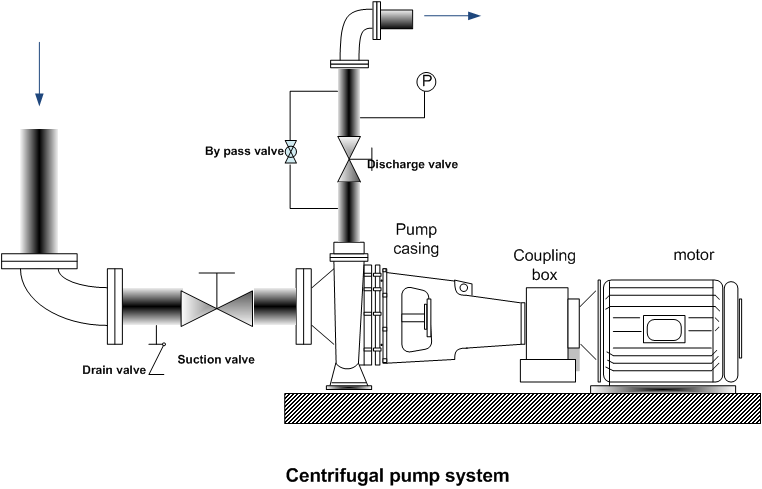
Students study the main parts of a centrifugal pump, including the impeller, casing (volute and diffuser types), shaft, bearings, and mechanical seals. The role of each component in achieving efficient fluid movement is explained, along with variations in pump design.
3. Operating Principles
This section focuses on how centrifugal pumps work, emphasizing concepts like velocity, pressure head, and energy transfer. Learners are introduced to key parameters such as flow rate, total dynamic head (TDH), and efficiency.
4. Pump Performance and Curves
Understanding performance curves is essential for proper pump selection and operation. The course teaches how to read and interpret pump curves, including head vs. flow, efficiency, power consumption, and Net Positive Suction Head (NPSH).
5. Installation and Start-Up
Proper installation ensures optimal performance and long service life. Topics include foundation setup, alignment, suction and discharge piping considerations, priming, and safe start-up procedures.
6. Operation and Control
Learners explore how to operate centrifugal pumps under varying conditions. This includes flow control methods, use of valves, and speed control using variable frequency drives (VFDs). Monitoring key parameters such as pressure, vibration, and temperature is also covered.
7. Cavitation and Common Problems
The course highlights common operational issues, especially cavitation—its causes, effects, and prevention. Other problems such as air binding, overheating, and loss of prime are also discussed, along with practical solutions.
8. Maintenance and Troubleshooting
Preventive maintenance practices are emphasized to ensure reliability and efficiency. Learners are trained to inspect components, identify wear patterns, and troubleshoot faults systematically to minimize downtime.
9. Safety and Best Practices
Safety procedures related to pump operation, including handling hazardous fluids, avoiding dry running, and ensuring proper isolation during maintenance, are discussed. Environmental and energy-efficiency considerations are also included.
Learning Outcomes
By the end of this course, learners will be able to:
- Explain the working principle of centrifugal pumps
- Identify key components and their functions
- Interpret pump performance curves and data
- Install, operate, and monitor pumps safely
- Diagnose and resolve common operational issues
- Teacher: izoh vic